 |
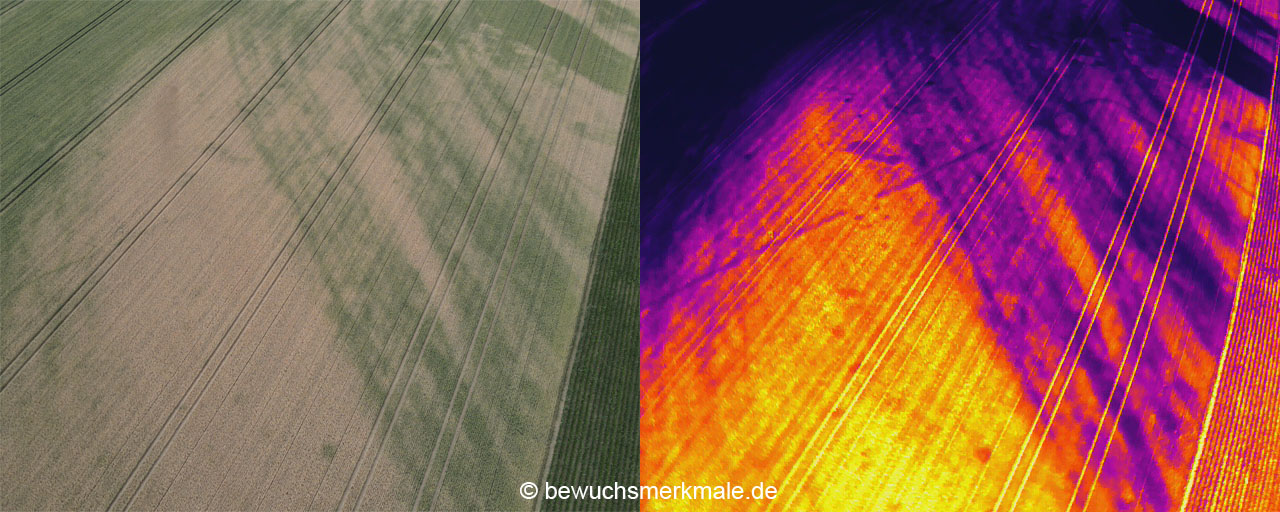
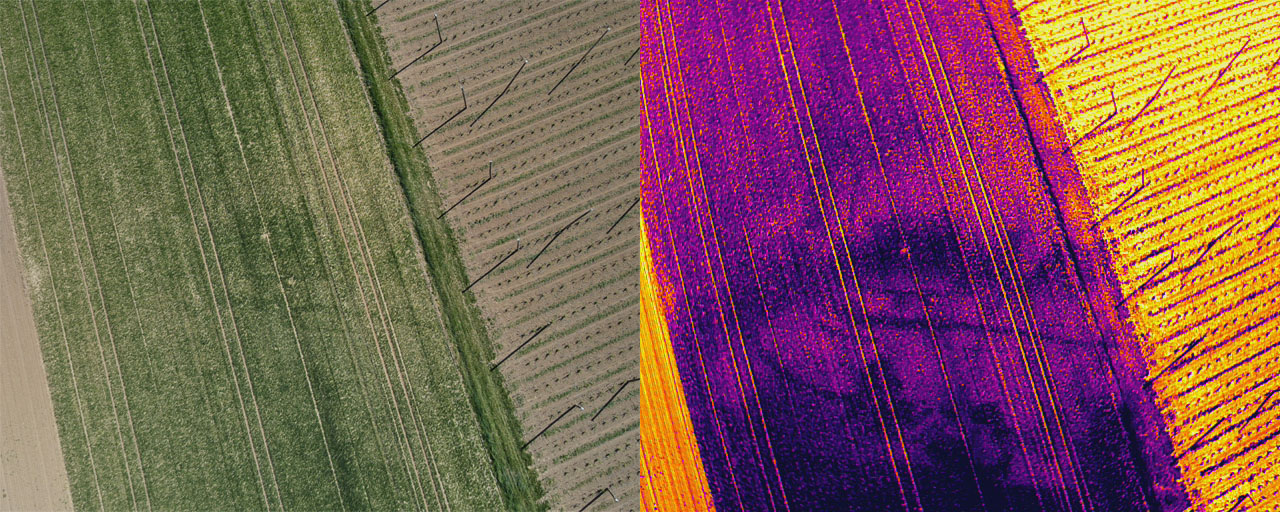
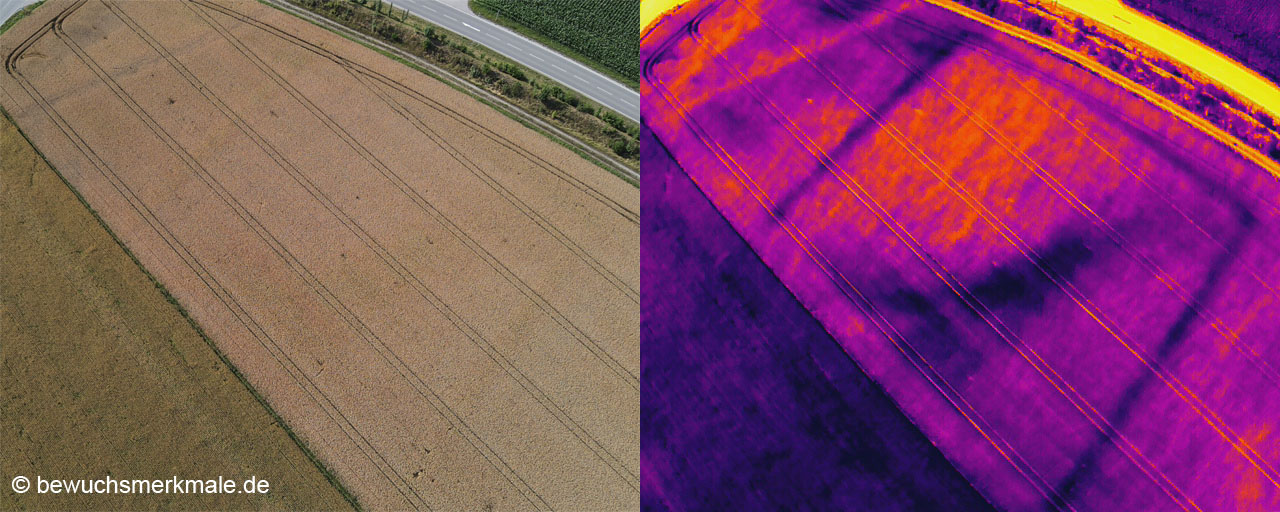
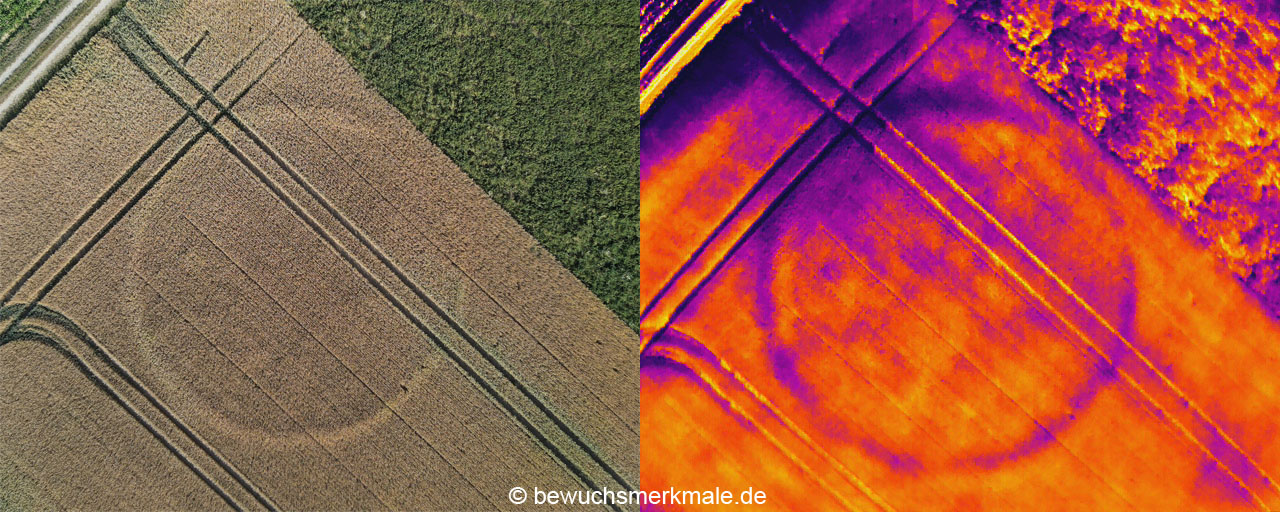
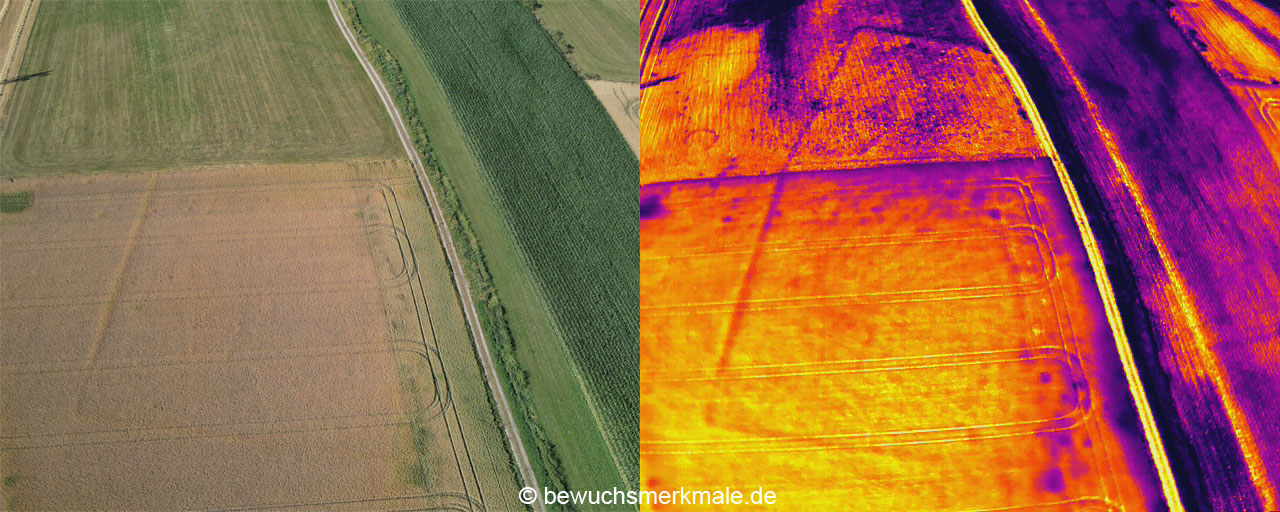
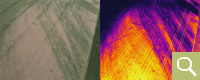
Part of what is believed to be a Roman training fort is visible in the winter wheat field. The trenches and the precisely rounded corners can be seen in the standard image. The trenches are much more clearly visible in the thermal image. Furthermore, a gate opening and four post pits are visible in this area, suggesting the presence of a gate structure (photo date 28.06.2026). |
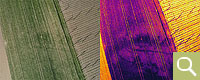 |
As early as the beginning of May, the ditches of what is believed to be a Hallstatt-period ditch system are visible as crop marks in the vegetation. The increase in our understanding, made possible by the use of thermography, is impressive. (photo date: 03.05.2026). |
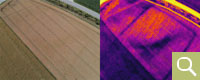 |
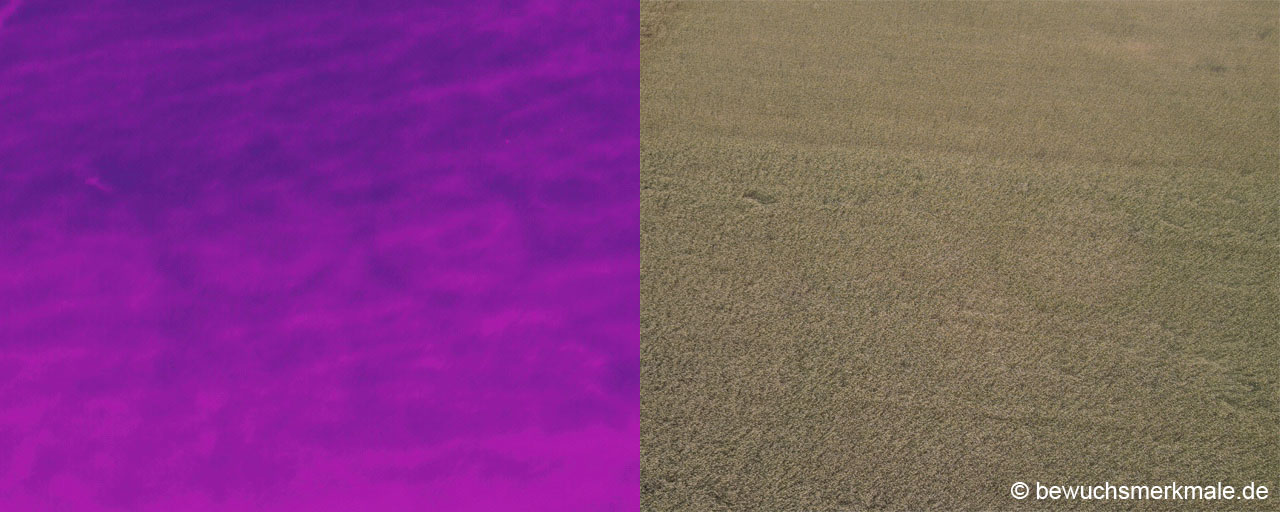
Even in mature wheat, crop marks of the trenches of a Latène quadrangular enclosure that are difficult to detect are clearly visible in the thermal image (photo date: 13.07.2025). |
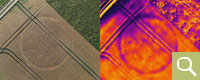 |
Comparative recording of positive crop marks and thermal characteristics of a circular ditch (photo date 02.07.2025) |
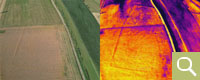 |
The structures of a trench system and a small circular ditch are much more clearly visible in the thermal image (photo date 02.07.2025) |
 |
The crop marks of 2 circular ditches, which are barely recognisable in the normal image, are much clearer in the thermal image (photo date 24.06.2023) |
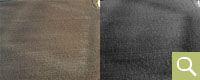 |
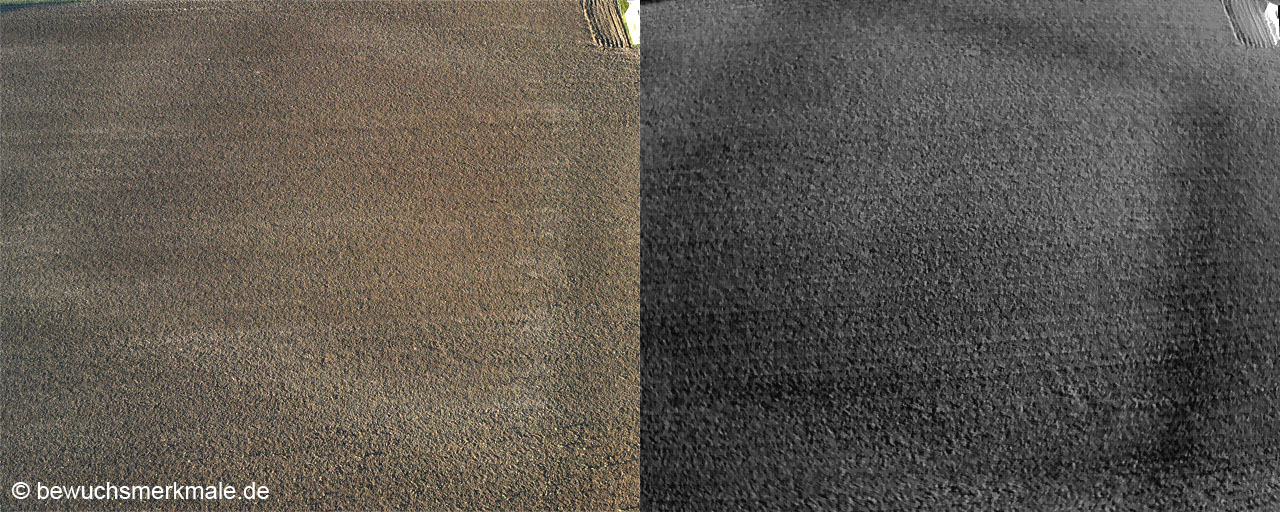
Comparison of moisture and thermal features in a Late Latène quadrangular enclosure (photo date 13.11.2022) |
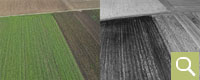 |
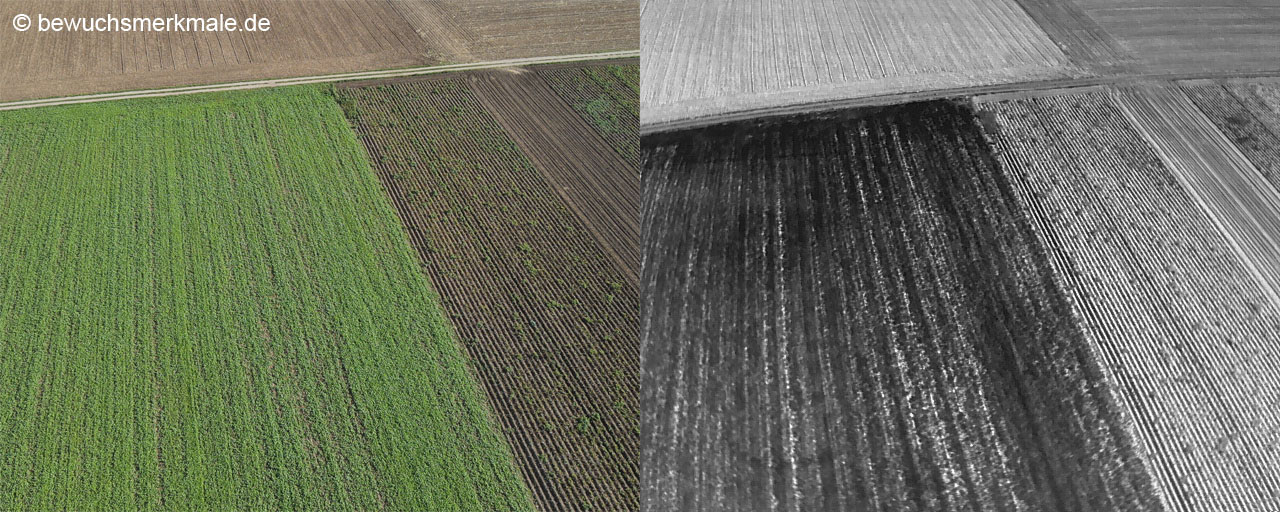
Young mustard plants form thermal features of a circular trench with central burial. No features are visible in the normal photograph (photo date 12.09.2022). |